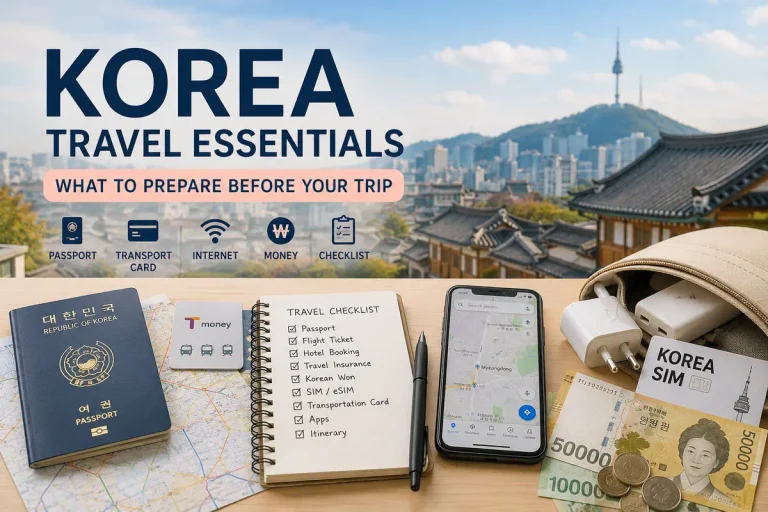
Staying connected is essential when traveling in South Korea. Mobile data can help you use maps, translation apps, public transportation information, and other travel services.
Travelers can choose between a physical SIM card, eSIM, and pocket Wi-Fi. This guide explains the differences and helps you choose the best option for your Korea trip.
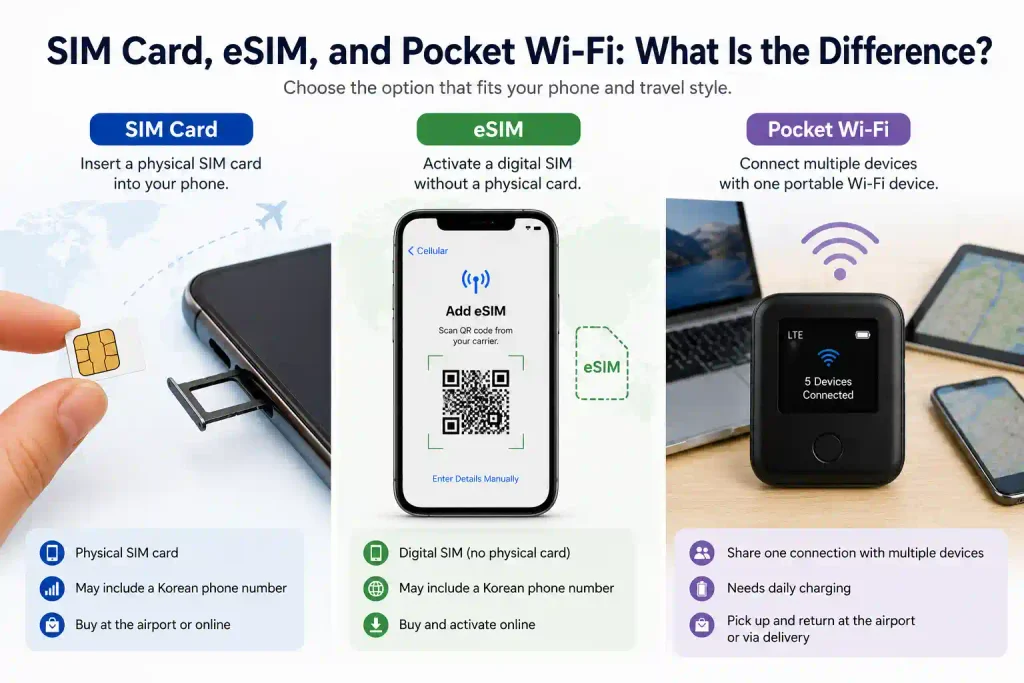
SIM Card, eSIM, and Pocket Wi-Fi: What Is the Difference?
Before choosing a mobile data option for Korea, it helps to understand how each one works.
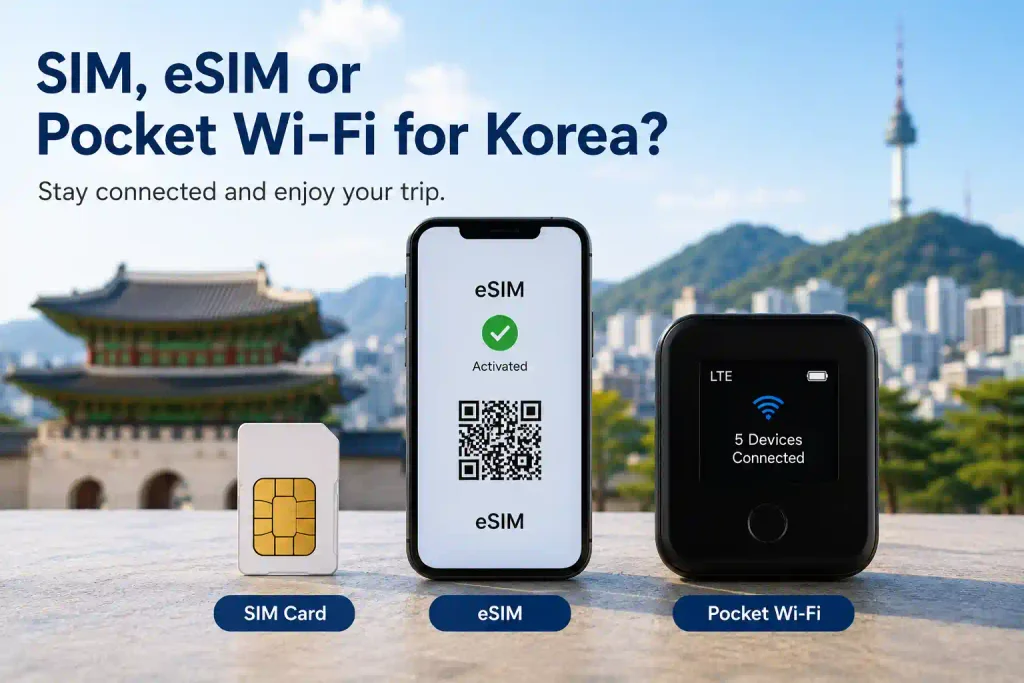
Korean SIM Card
A physical SIM card is inserted directly into your smartphone. Korean travel SIM cards are commonly available as prepaid plans for short-term visitors.
The main advantage is that the setup is straightforward. However, you need a phone with a physical SIM slot, and you will need to remove your regular SIM card if you use the Korean SIM in the same slot.
eSIM
An eSIM is a digital SIM that is installed directly on a compatible smartphone. You do not need to insert or remove a physical card.
For many travelers, an eSIM is convenient because you can purchase it online and install it before your trip.
Before buying one, check whether your phone supports eSIM and whether your device is carrier-unlocked.
Pocket Wi-Fi
Pocket Wi-Fi is a small portable router that connects to a Korean mobile network and provides a Wi-Fi connection for your devices.
It can be useful for families or groups because multiple devices can connect to one device. The downside is that you need to carry and charge the router during your trip.

Where Can You Buy a SIM Card or eSIM in Korea?
You can arrange your internet connection before your trip or after arriving in Korea.
At the Airport
Physical SIM: Available at telecommunications roaming centers at major Korean airports, including Incheon International Airport.
Pocket Wi-Fi: Available at airport Wi-Fi rental counters.
This is a convenient option if you want to get connected immediately after arrival.
At Convenience Stores
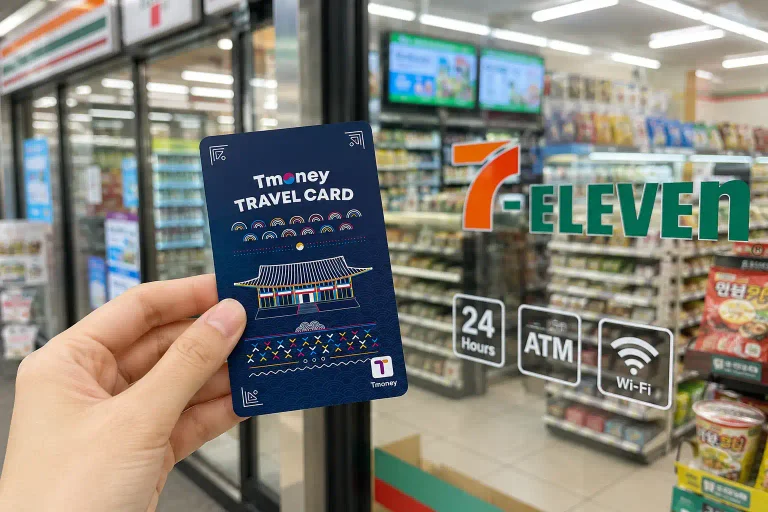
Travel SIM cards are available at some CU and 7-Eleven stores.
Availability can vary by location, so check in advance if possible.
Online
eSIM: Purchase an eSIM online before your trip and install it using the provider’s QR code or activation instructions.
This is a convenient choice if you want mobile data ready when you arrive in Korea.
Through Travel Platforms
You can also purchase SIM cards, eSIMs, and pocket Wi-Fi through travel platforms such as Klook, Creatrip, and KRSIM.
- Klook: Offers products from SK Telecom, KT, LG U+, and WiFi Dosirak.
- Creatrip: Offers various Korean SIM, eSIM, and pocket Wi-Fi products.
- KRSIM: Specializes in Korean prepaid SIM, eSIM, and Wi-Fi products.
When booking, check the network provider, data allowance, speed limit, Korean phone number, and activation requirements. Prices and promotions may vary.
Which Option Is Best for a Korea Trip?
The best option depends mainly on your phone, how many devices need internet access, and whether you want to carry an additional device.
| Your situation | Recommended option |
|---|
| Your phone supports eSIM | eSIM |
| Your phone does not support eSIM | Physical SIM |
| Several people want to share one connection | Pocket Wi-Fi |
| You want to keep your regular SIM in your phone | eSIM |
| You need a Korean phone number | SIM or eSIM with voice service |
eSIM — Best for Convenience
If your phone supports eSIM, it is a convenient option for travelers who want to arrange their internet before arriving in Korea.
You can install the eSIM without removing your physical SIM card, and there is no additional device to carry.
Physical SIM — A Traditional Option
A physical SIM is a good choice if your phone does not support eSIM or you simply prefer a traditional SIM card.
You can purchase one online or at an airport roaming center after arriving in Korea. You will need to replace your regular SIM card to use it.
Pocket Wi-Fi — Best for Sharing
Pocket Wi-Fi is useful when multiple devices need to share one internet connection.
It can be a cost-effective choice for people traveling together, especially when they usually stay in the same group. However, the device needs to be carried and charged, and everyone needs to stay within its connection range.
Quick recommendation: Choose an eSIM for convenience, a physical SIM if your phone does not support eSIM, or Pocket Wi-Fi if several devices need to share one connection.
What Should You Check Before Buying a Korea SIM or eSIM?
Before purchasing a SIM or eSIM, check these four things:
1. Phone Compatibility
Make sure your phone is carrier-unlocked.
If you are using an eSIM, check that your exact phone model supports eSIM. For a physical SIM, make sure your phone has a compatible SIM slot.
2. Data and Speed
Check the data allowance and speed limit.
Some plans offer unlimited data, while others provide a daily high-speed allowance and reduce the speed after you reach the limit.
3. Validity Period
Check how long the plan is valid and when the validity period starts.
Choose a plan that covers your entire stay in Korea.
4. Korean Phone Number
If you need to make local calls, send SMS, or use services that require a Korean number, choose a plan that includes a Korean 010 number with voice and SMS.
Data-only SIMs and eSIMs do not necessarily include a Korean phone number.
Is Pocket Wi-Fi Worth It in Korea?
Pocket Wi-Fi can be a practical choice, but it is not automatically better than a SIM or eSIM.
Advantages of Pocket Wi-Fi
- Several devices can share one connection.
- You do not need to change the SIM card.
- It can work well for families and groups.
- Multiple travelers can share the cost.
Disadvantages of Pocket Wi-Fi
- You need to carry an additional device.
- The router needs to be charged.
- Travelers need to stay within the device’s connection range.
- Losing the device can create additional problems or fees depending on the rental terms.
For a solo traveler, carrying an additional device may be unnecessary. For a group, however, the ability to share one connection can make pocket Wi-Fi more attractive.
A Simple Way to Choose
Still not sure which option to choose? Use this quick guide:
- eSIM-compatible phone + want the easiest setup → eSIM
- No eSIM support or prefer a physical card → Physical SIM
- Several people want to share one connection → Pocket Wi-Fi
- Need a Korean phone number for calls or SMS → SIM or eSIM with voice service
- Want to keep using your existing mobile plan → International roaming
For most travelers, an eSIM is the most convenient choice if their phone supports it. A physical SIM is a good alternative, while Pocket Wi-Fi works well when multiple devices need to share one connection.
Final Tips for Staying Connected in Korea
Before your trip, check your phone’s SIM/eSIM compatibility and make sure it is carrier-unlocked if required.
If you use an eSIM, install it according to the provider’s instructions before or after arrival. For a physical SIM, keep your original SIM card somewhere safe.
If you rent a pocket Wi-Fi device, charge it daily and check the pickup and return instructions before your trip.
Finally, check the plan’s data allowance, validity period, speed limit, and Korean phone number options before purchasing.